
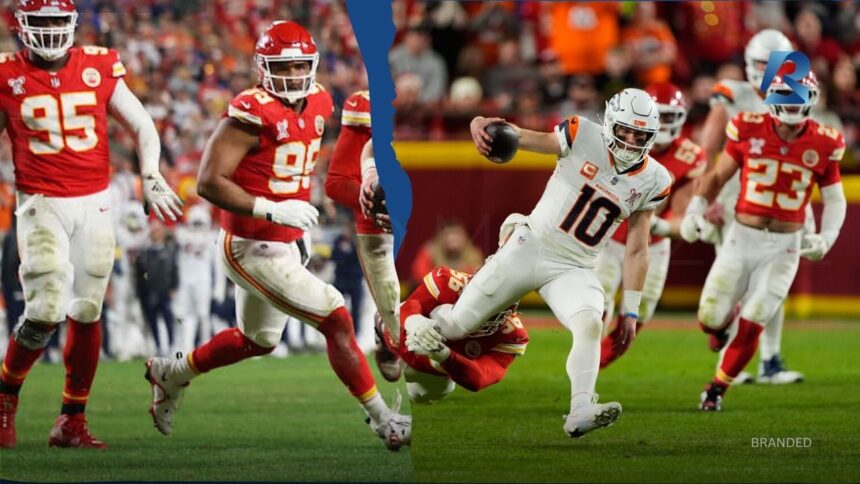
The clash between the Denver Broncos vs Kansas City Chiefs Match Player Stats on December 26, 2025 turned into a controlled and strategic contest. Denver entered the game with a clear plan, focusing on possession and minimizing mistakes. That approach allowed them to slowly build pressure and take command of the matchup.
Kansas City struggled to match that consistency throughout the game. While they showed brief flashes of competitiveness, their inability to sustain drives proved costly. The Broncos capitalized on those gaps and secured a 20–13 victory through disciplined execution.
Quick Score Table
| Team | 1 | 2 | 3 | 4 | Final |
|---|---|---|---|---|---|
| Denver Broncos | 3 | 3 | 7 | 7 | 20 |
| Kansas City Chiefs | 0 | 7 | 3 | 3 | 13 |
Score Progression Across Four Quarters
The first quarter saw the Broncos take an early lead with a field goal, establishing initial momentum. Kansas City remained quiet offensively, failing to respond immediately. In the second quarter, both teams exchanged points, with the Chiefs finally finding the end zone to stay within reach.
After halftime, Denver increased their control by scoring in both the third and fourth quarters. Kansas City added limited points but never regained momentum. The Broncos maintained their advantage and closed out the game effectively.
Ball Control and Offensive Flow
Denver’s offensive strategy revolved around controlling possession and maintaining steady progress. They executed long drives that consumed time and reduced Kansas City’s chances to respond. Their 303 total yards may not seem dominant, but their efficiency made the difference.
The Chiefs faced difficulties in establishing any consistent rhythm. Their total yardage remained limited, and they were unable to string together successful drives. This lack of flow forced them into a reactive position for most of the game.
Passing vs Rushing Impact
The Broncos balanced their attack between passing and rushing, which allowed them to stay unpredictable. Their quarterback delivered a steady performance, while the rushing unit contributed significantly with over 100 yards. This dual-threat approach helped maintain pressure on the defense.
Kansas City’s passing game was unusually quiet, producing only 57 yards. Their rushing effort added some support but was not enough to compensate. The imbalance between passing and rushing made their offense easier to contain.
Defensive Strength and Pressure
Denver’s defense was one of the most important factors in the game. They limited big plays and consistently forced Kansas City into difficult situations. Their ability to control space and apply pressure ensured that the Chiefs could not develop momentum.
The Chiefs’ defense showed discipline but faced challenges due to extended time on the field. They managed to contain some drives but could not stop Denver during crucial moments. Fatigue and lack of offensive support affected their overall effectiveness.
Team Performance Stats
| Category | Broncos | Chiefs |
|---|---|---|
| Total Yards | 303 | 139 |
| Passing Yards | 175 | 57 |
| Rushing Yards | 128 | 82 |
| Turnovers | 1 | 0 |
| Possession | 39:28 | 20:32 |
Key Performers and Contributions
Denver’s quarterback played a composed game, focusing on accuracy and decision-making rather than big plays. The running backs contributed heavily, ensuring that the offense maintained balance and consistency throughout the game.
Kansas City’s key players struggled to make a major impact. Their offensive leaders were unable to break through Denver’s defensive setup. The lack of standout performances contributed to their overall struggles.
Momentum Shifts That Defined the Game
Momentum remained with Denver for most of the contest, especially due to their ability to control time of possession. Each successful drive reduced Kansas City’s chances to recover and build confidence.
The third quarter proved to be particularly important, as Denver extended their lead and forced the Chiefs into a more aggressive approach. This shift created additional pressure, leading to mistakes and missed opportunities.
Tactical Breakdown and Strategy Review
Denver’s tactical approach was built around patience and discipline. They avoided unnecessary risks and focused on executing fundamental plays. This strategy allowed them to maintain control and limit errors.
Kansas City attempted to rely on their traditional offensive style but struggled to adapt when it failed. Their inability to adjust to Denver’s defensive pressure highlighted a key weakness in their game plan.
Overall Team Evaluation
The Denver Broncos delivered a well-rounded performance, combining effective offense with strong defensive discipline. Their ability to execute consistently made them the better team on the day.
The Kansas City Chiefs faced challenges in multiple areas, particularly on offense. Their performance showed the need for improved coordination and adaptability in future games.
Key Player Comparison
| Player Role | Team | Impact |
|---|---|---|
| QB Leader | Broncos | Game control |
| Top Rusher | Broncos | Strong yards |
| Key QB | Chiefs | Limited impact |
| Defensive Star | Broncos | Pressure control |
Conclusion
The Denver Broncos defeated the Kansas City Chiefs 20–13 in a controlled NFL performance. Their dominance in key areas defined the outcome.
The Chiefs were unable to match Denver’s consistency, particularly on offense. The match highlighted the importance of possession and efficiency.
Visit More Branded Magazine