
The FIFA World Cup 2026 continued on 19 June with a crucial Group D encounter between the United States and Australia at Lumen Field in Seattle. The United States delivered an impressive performance and secured a 2-0 victory, earning qualification for the Round of 32 with one group-stage match still remaining. Despite missing injured captain Christian Pulisic, the Americans controlled much of the contest and produced one of their most complete performances of the tournament.
The United States vs Australia match player stats highlight the dominance of Mauricio Pochettino’s side. An early own goal from Cameron Burgess and a first-half header from Alex Freeman gave the Americans a comfortable advantage. Australia improved after halftime but struggled to break through a disciplined U.S. defense that recorded its first clean sheet in several matches.
Match Result
| Team | Score |
|---|---|
| United States | 2 |
| Australia | 0 |
Match Overview
The United States entered the match after defeating Paraguay in its opening fixture, while Australia arrived with confidence following a surprising victory over Türkiye. Both teams understood the importance of the result, as a second consecutive win would virtually guarantee progression to the knockout stage.
Without Christian Pulisic, many wondered whether the U.S. attack would remain effective. However, players such as Ricardo Pepi, Folarin Balogun, Malik Tillman, and Alex Freeman stepped up and delivered a strong collective performance. Australia competed hard but struggled to cope with the pace and movement of the American attack.
Information Table
| Match Detail | Information |
|---|---|
| Match | United States vs Australia |
| Date | 19 June 2026 |
| Competition | FIFA World Cup 2026 |
| Group | Group D |
| Venue | Lumen Field, Seattle, Washington |
| Final Score | United States 2-0 Australia |
| Half-Time Score | United States 2-0 Australia |
| Winner | United States |
| Man of the Match | Alex Freeman |
| Attendance | Over 68,000 |
| Tournament Impact | United States Qualified for Round of 32 |
Half-Time and Full-Time Scores
| Period | Score |
|---|---|
| Half-Time | USA 2-0 Australia |
| Full-Time | USA 2-0 Australia |
The victory secured six points from two matches for the United States and guaranteed advancement to the knockout stage. Australia remained on three points and faced a decisive final group match.
First Half Analysis
The United States started aggressively and immediately placed pressure on Australia’s defensive line. Their early attacking approach paid off in the 11th minute when Folarin Balogun delivered a dangerous ball into the penalty area. Defender Cameron Burgess attempted to intervene but accidentally redirected the ball into his own net.
The Americans continued to dominate possession and create opportunities. Australia struggled to establish any sustained rhythm and spent much of the opening period defending. Just before halftime, Alex Freeman rose highest inside the penalty area and headed home a crucial second goal. After a VAR review, the goal stood, giving the United States a commanding advantage heading into the break.
First-Half Statistics
| Category | United States | Australia |
|---|---|---|
| Goals | 2 | 0 |
| Possession | 62% | 38% |
| Shots | 10 | 5 |
| Shots on Target | 2 | 2 |
| Corners | 7 | 4 |
Second Half Analysis
Australia emerged with greater urgency after halftime. Coach Tony Popovic introduced Connor Metcalfe and Nestory Irankunda in an effort to inject pace and creativity into the attack. The substitutions improved Australia’s energy levels and allowed them to spend more time in possession.
Despite the improvement, the United States remained organized defensively. Chris Richards, Tim Ream, and Antonee Robinson dealt effectively with Australia’s attacks, while goalkeeper Matt Freese rarely faced clear-cut scoring opportunities. The Americans managed the game professionally and secured an important clean sheet.
Goal Scorers and Key Match Events
Goals Table
| Minute | Team | Scorer |
|---|---|---|
| 11′ | United States | Cameron Burgess (Own Goal) |
| 43′ | United States | Alex Freeman |
Major Match Events
| Minute | Event |
|---|---|
| 11′ | Cameron Burgess scores own goal |
| 32′ | Alessandro Circati receives yellow card |
| 43′ | Alex Freeman scores header |
| 46′ | Australia makes three substitutions |
| 80′ | United States defensive changes |
| FT | United States wins 2-0 |
Alex Freeman Delivers a Breakthrough Performance
Alex Freeman produced one of the standout performances of the match. The young defender demonstrated excellent timing and composure when he scored the second goal shortly before halftime. His powerful header provided the United States with a comfortable cushion and significantly reduced Australia’s chances of mounting a comeback.
Beyond the goal, Freeman contributed defensively and showed maturity throughout the contest. His performance highlighted the depth available within the American squad and demonstrated why coach Mauricio Pochettino has confidence in younger players.
Alex Freeman Match Statistics
| Statistic | Total |
|---|---|
| Goals | 1 |
| Shots on Target | 1 |
| Headers Won | Multiple |
| Minutes Played | Full Match |
| Match Rating | 8.5/10 |
United States Starting XI Performance
The American lineup functioned efficiently despite the absence of Christian Pulisic. Ricardo Pepi worked tirelessly up front, while Folarin Balogun consistently stretched Australia’s defense with intelligent movement. Malik Tillman and Weston McKennie controlled the midfield and won several important duels.
Defensively, the United States looked compact and disciplined. Chris Richards and Tim Ream organized the back line effectively, while Antonee Robinson contributed both defensively and offensively from the left side.
Top United States Performers
| Player | Contribution |
|---|---|
| Alex Freeman | Goal and Defensive Work |
| Folarin Balogun | Forced Own Goal |
| Malik Tillman | Midfield Control |
| Chris Richards | Defensive Leadership |
| Matt Freese | Clean Sheet |
Australia Starting XI Performance
Australia struggled to impose its usual physical style during the first half. The Socceroos found it difficult to create meaningful chances and often lost possession in dangerous areas. However, several players improved after halftime and helped the team become more competitive.
Captain Harry Souttar worked hard in defense, while midfielders Aiden O’Neill and Paul Okon-Engstler attempted to stabilize possession. Nestory Irankunda provided additional attacking energy after coming off the bench.
Top Australia Performers
| Player | Contribution |
|---|---|
| Harry Souttar | Defensive Leadership |
| Patrick Beach | Important Saves |
| Nestory Irankunda | Positive Substitute Appearance |
| Aiden O’Neill | Midfield Work Rate |
| Alessandro Circati | Defensive Interventions |
Midfield Battle Analysis
The midfield contest played a decisive role in the outcome. The United States consistently won second balls and controlled possession through the efforts of Tyler Adams, Weston McKennie, and Malik Tillman. Their ability to transition quickly from defense to attack repeatedly caused problems for Australia.
Australia’s midfield improved during the second half but never established sustained control. The Americans pressed aggressively and prevented the Socceroos from creating dangerous combinations in central areas. This advantage helped the United States dictate the tempo for most of the match.
Defensive Performance Comparison
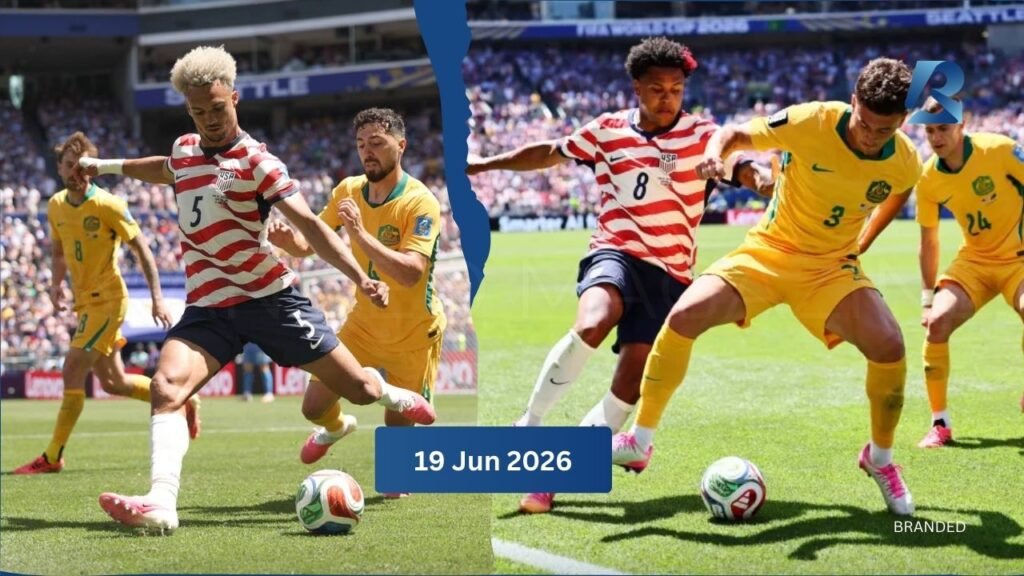
One of the most encouraging aspects of the American performance was the defensive organization. After conceding in previous matches, the United States produced a disciplined display and limited Australia to very few dangerous opportunities.
Australia defended better after the opening stages but paid the price for the own goal and struggled to recover. The back line worked hard, yet the team lacked the defensive consistency required against high-level opposition.
Defensive Statistics
| Category | United States | Australia |
|---|---|---|
| Goals Conceded | 0 | 2 |
| Clean Sheet | Yes | No |
| Yellow Cards | 3 | 4 |
| Defensive Errors Leading to Goals | 0 | 1 |
Goalkeeper Statistics
Both goalkeepers made important contributions during the match. Matt Freese remained calm whenever called upon and preserved the clean sheet with several routine saves. Patrick Beach prevented the scoreline from becoming more lopsided with a number of solid interventions. Explore more Mexico vs South Korea Match Player Stats
Goalkeeper Comparison
| Goalkeeper | Team | Goals Conceded |
|---|---|---|
| Matt Freese | United States | 0 |
| Patrick Beach | Australia | 2 |
Complete Team Statistics
Team Comparison Table
| Statistic | United States | Australia |
|---|---|---|
| Goals | 2 | 0 |
| Shots | 10 | 5 |
| Shots on Target | 2 | 2 |
| Possession | 62% | 38% |
| Corners | 7 | 4 |
| Yellow Cards | 3 | 4 |
| xG | 1.33 | 0.51 |
Tactical Analysis
Mauricio Pochettino set up the United States to press aggressively and attack quickly through wide areas. The strategy worked effectively, particularly during the opening 45 minutes when Australia struggled to cope with the movement of Balogun and Pepi.
Australia attempted to play a more direct style but found it difficult to create quality opportunities. The Socceroos improved after making substitutions, yet they lacked the creativity needed to unlock the American defense. The tactical battle ultimately favored the United States from start to finish.
Turning Points of the Match
1. Cameron Burgess Own Goal
The early own goal immediately placed Australia under pressure and shifted momentum toward the Americans.
2. Alex Freeman’s Header
The second goal just before halftime significantly increased the difficulty of Australia’s comeback attempt.
3. Australia’s Missed Opportunities
The Socceroos failed to capitalize on their improved second-half performance.
4. Strong U.S. Defensive Organization
The American defense remained disciplined and secured a valuable clean sheet.
What the Result Means for Group D
The victory guaranteed qualification for the United States and moved the team into an excellent position to finish first in Group D. The Americans became one of the earliest teams to book a place in the Round of 32 and strengthened belief that they could make a deep tournament run.
Australia remained alive in the competition but needed a positive result in its final group match. The defeat increased pressure on the Socceroos and complicated their path toward qualification.
Player Ratings
United States Ratings
| Player | Rating |
|---|---|
| Alex Freeman | 8.5/10 |
| Folarin Balogun | 8/10 |
| Malik Tillman | 8/10 |
| Chris Richards | 7.5/10 |
| Matt Freese | 7.5/10 |
Australia Ratings
| Player | Rating |
|---|---|
| Harry Souttar | 7/10 |
| Patrick Beach | 7/10 |
| Nestory Irankunda | 6.5/10 |
| Aiden O’Neill | 6.5/10 |
| Alessandro Circati | 6/10 |
Conclusion
The United States vs Australia match player stats demonstrate why the Americans emerged as one of the strongest teams in the opening stages of the FIFA World Cup 2026. Despite missing Christian Pulisic, the United States delivered a confident and disciplined performance that resulted in a comfortable 2-0 victory and qualification for the knockout rounds.
Alex Freeman’s breakthrough display, strong midfield control, and organized defending allowed the United States to dominate key phases of the match. Australia showed resilience but could not recover from the early setbacks. As the tournament progressed, the Americans looked increasingly capable of making a significant impact on home soil.
Frequently Asked Questions
What was the final score between the United States and Australia?
The United States defeated Australia 2-0.
Who scored for the United States?
Cameron Burgess scored an own goal, and Alex Freeman added the second goal.
Did Christian Pulisic play?
No. Christian Pulisic missed the match because of injury.
Who was the best player in the match?
Alex Freeman was among the standout performers after scoring the second goal.
Did the United States qualify for the knockout stage?
Yes. The victory secured qualification for the Round of 32.
Stay More Update BRANDED MAGAZINE