
The FIFA World Cup 2026 delivered another memorable contest on 22 June 2026 as Uruguay and Cape Verde played out an entertaining 2-2 draw in Group H. Many football fans expected Uruguay to secure all three points, but Cape Verde produced a determined performance and earned one of the most impressive results in their World Cup history.
The Uruguay vs Cape Verde Match Player Stats highlight a fascinating contrast between possession and efficiency. Uruguay controlled most of the ball and created a higher number of chances, while Cape Verde made the most of their opportunities and demonstrated remarkable resilience against one of South America’s traditional football powers.
Information Table
| Match Detail | Information |
|---|---|
| Match | Uruguay vs Cape Verde |
| Tournament | FIFA World Cup 2026 |
| Date | 22 June 2026 |
| Group | Group H |
| Final Score | Uruguay 2-2 Cape Verde |
| Half-Time Score | Uruguay 2-1 Cape Verde |
| Venue | Hard Rock Stadium, Miami |
| Result | Draw |
Match Overview
Uruguay entered the match looking to strengthen their position in Group H and immediately attempted to control possession. Their midfield dictated the tempo for long periods, while the attacking players consistently pushed forward in search of goals. Despite their dominance, they struggled to convert possession into a comfortable advantage.
Cape Verde approached the contest with confidence and tactical discipline. The African side defended effectively, remained dangerous on counterattacks, and capitalized on key moments to secure a valuable point. Their performance demonstrated why they have become one of the most competitive emerging teams in international football.
Match Overview Table
| Category | Uruguay | Cape Verde |
|---|---|---|
| Result | Draw | Draw |
| Goals | 2 | 2 |
| Points Earned | 1 | 1 |
| Possession | 65.3% | 34.7% |
First Half Analysis
The opening half produced plenty of excitement and momentum shifts. Cape Verde shocked Uruguay in the 21st minute when Kevin Pina scored with an outstanding free-kick that left the goalkeeper with little chance. The goal boosted Cape Verde’s confidence and forced Uruguay to increase their attacking intensity.
Uruguay responded strongly before halftime. Maximiliano Araújo equalized in the 44th minute, and Agustín Canobbio scored deep into first-half stoppage time to complete the comeback. By halftime, Uruguay appeared to have taken control after turning a deficit into a 2-1 lead.
First Half Statistics Table
| Statistic | Uruguay | Cape Verde |
|---|---|---|
| Goals | 2 | 1 |
| Possession | 66% | 34% |
| Shots | 9 | 5 |
| Shots on Target | 1 | 2 |
| Corners | 6 | 2 |
| Pass Accuracy | 88% | 76% |
Second Half Analysis
Cape Verde entered the second half determined to find another goal and continued to challenge Uruguay whenever opportunities emerged. Their persistence paid off in the 61st minute when Hélio Varela scored the equalizer, bringing the match level once again.
The remainder of the match saw Uruguay push aggressively for a winner. They controlled possession, won multiple corners, and spent long periods attacking inside Cape Verde’s half. However, Cape Verde defended bravely and held on to secure a historic draw against one of the tournament favorites. Read more Belgium vs Iran.
Second Half Statistics Table
| Statistic | Uruguay | Cape Verde |
|---|---|---|
| Goals | 0 | 1 |
| Shots | 8 | 7 |
| Shots on Target | 1 | 2 |
| Corners | 5 | 2 |
| Dangerous Attacks | 24 | 11 |
Goals and Key Match Events
The match featured four important goals that completely changed the momentum on several occasions. Kevin Pina opened the scoring with a brilliant set-piece before Uruguay responded through Maximiliano Araújo and Agustín Canobbio before halftime.
Cape Verde refused to give up despite trailing at the break. Hélio Varela’s second-half goal rewarded their determination and secured a result that could have major implications for the Group H standings.
Goals Table
| Minute | Team | Goal Scorer |
|---|---|---|
| 21′ | Cape Verde | Kevin Pina |
| 44′ | Uruguay | Maximiliano Araújo |
| 45+6′ | Uruguay | Agustín Canobbio |
| 61′ | Cape Verde | Hélio Varela |
Uruguay Player Statistics
Several Uruguayan players delivered strong individual performances despite the disappointing result. Maximiliano Araújo provided an important goal and frequently threatened the opposition defense with intelligent movement and attacking runs.
The midfield controlled possession effectively and created opportunities throughout the contest. However, Uruguay’s attackers struggled with efficiency in front of goal, preventing the team from converting dominance into victory.
Uruguay Player Statistics Table
| Player | Goals | Assists | Contribution |
|---|---|---|---|
| Maximiliano Araújo | 1 | 0 | Equalizing Goal |
| Agustín Canobbio | 1 | 0 | Go-Ahead Goal |
| Federico Valverde | 0 | 1 | Midfield Leadership |
| Manuel Ugarte | 0 | 0 | Ball Recovery |
| Ronald Araújo | 0 | 0 | Defensive Work |
| Santiago Mele | 0 | 0 | Goalkeeping |
Cape Verde Player Statistics
Cape Verde’s squad delivered one of the team’s most impressive World Cup performances. Kevin Pina’s free-kick goal provided the perfect start, while Hélio Varela’s equalizer ensured the team earned a valuable point.
The defensive players also deserve significant credit for handling constant pressure from Uruguay. Their organization, determination, and teamwork allowed Cape Verde to survive numerous attacking waves and secure a positive result.
Cape Verde Player Statistics Table
| Player | Goals | Assists | Contribution |
|---|---|---|---|
| Kevin Pina | 1 | 0 | Opening Goal |
| Hélio Varela | 1 | 0 | Equalizing Goal |
| Ryan Mendes | 0 | 1 | Creative Influence |
| Jamiro Monteiro | 0 | 0 | Midfield Energy |
| Roberto Lopes | 0 | 0 | Defensive Leadership |
| Vozinha | 0 | 0 | Important Saves |
Goalkeeper Performance Analysis
Uruguay’s goalkeeper faced relatively few opportunities compared to his counterpart but was unable to prevent Cape Verde from scoring with two clinical finishes. Despite conceding twice, he remained composed and handled other situations effectively.
Cape Verde goalkeeper Vozinha played a critical role in securing the draw. He dealt confidently with crosses, organized the defense, and made important saves during periods of intense Uruguayan pressure, especially late in the match.
Goalkeeper Statistics Table
| Goalkeeper | Team | Saves | Goals Conceded |
|---|---|---|---|
| Santiago Mele | Uruguay | 2 | 2 |
| Vozinha | Cape Verde | 4 | 2 |
Team Statistics Comparison
The overall statistics illustrate Uruguay’s dominance in possession and territorial control. They completed more passes, won more corners, and spent significantly more time in attacking areas. Despite these advantages, they failed to convert enough opportunities into goals.
Cape Verde demonstrated remarkable efficiency throughout the match. Although they created fewer chances and had less possession, they finished clinically when opportunities arrived and defended effectively under sustained pressure from Uruguay.
Team Statistics Comparison Table
| Statistic | Uruguay | Cape Verde |
|---|---|---|
| Possession | 65.3% | 34.7% |
| Shots | 17 | 12 |
| Shots on Target | 2 | 4 |
| Goals | 2 | 2 |
| Corners | 11 | 4 |
| Pass Accuracy | 87% | 77% |
| Yellow Cards | 2 | 2 |
| xG | 2.43 | 0.59 |
Tactical Analysis
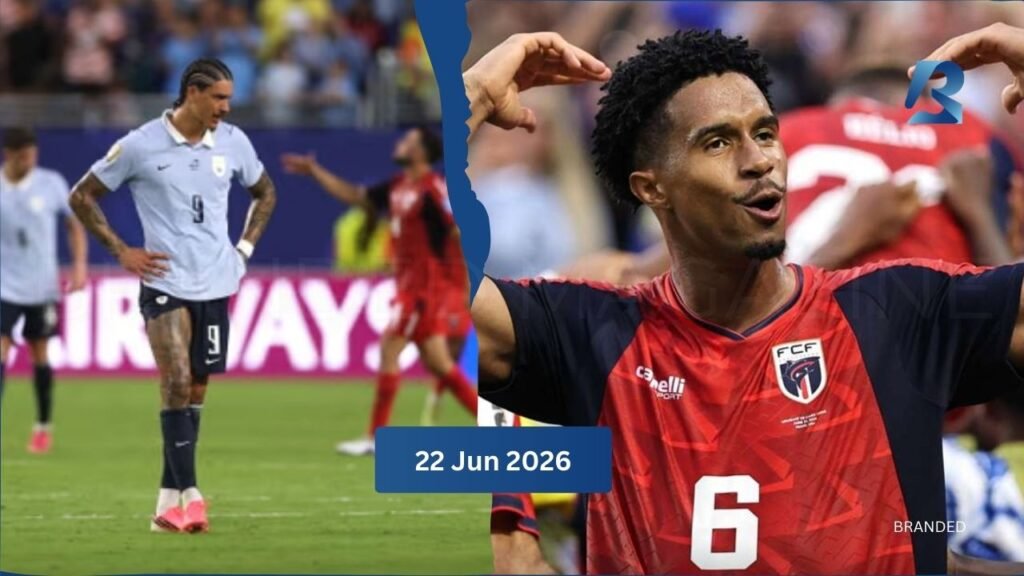
Uruguay relied on a possession-oriented approach and attempted to control the game through midfield dominance. Federico Valverde and Manuel Ugarte helped maintain rhythm and circulation, while the attacking players constantly searched for spaces behind Cape Verde’s defensive line.
Cape Verde adopted a disciplined defensive structure and focused on quick transitions. Their compact shape reduced space in central areas, while fast counterattacks allowed them to threaten Uruguay whenever possession was regained. The strategy proved highly effective against a technically superior opponent.
Tactical Analysis Table
| Category | Uruguay | Cape Verde |
|---|---|---|
| Formation | 4-3-3 | 4-2-3-1 |
| Playing Style | Possession Based | Counterattacking |
| Pressing Intensity | High | Medium |
| Main Strength | Midfield Control | Defensive Organization |
| Tactical Success | Partial | Successful |
Top Performers of the Match
Kevin Pina emerged as one of the game’s standout performers after opening the scoring with a spectacular free-kick. His contribution gave Cape Verde belief and set the tone for their impressive performance against one of South America’s strongest teams.
For Uruguay, Maximiliano Araújo delivered a strong display and scored the crucial equalizer before halftime. Hélio Varela also deserves recognition for his important second-half goal, while Federico Valverde influenced the match through his passing and leadership in midfield.
Top Performers Table
| Player | Team | Contribution |
|---|---|---|
| Kevin Pina | Cape Verde | Goal |
| Hélio Varela | Cape Verde | Equalizing Goal |
| Maximiliano Araújo | Uruguay | Goal |
| Agustín Canobbio | Uruguay | Goal |
| Federico Valverde | Uruguay | Assist and Midfield Control |
Turning Points of the Match
The first major turning point arrived in the 21st minute when Kevin Pina’s free-kick gave Cape Verde an unexpected lead. The goal forced Uruguay to abandon a patient approach and attack with greater urgency.
Another crucial moment came in the 61st minute when Hélio Varela equalized. That goal shifted momentum back toward Cape Verde and placed pressure on Uruguay, who were unable to find a winning goal despite dominating possession during the final stages.
Turning Points Table
| Minute | Event | Impact |
|---|---|---|
| 21′ | Kevin Pina Goal | Cape Verde Lead |
| 44′ | Araújo Goal | Uruguay Equalize |
| 45+6′ | Canobbio Goal | Uruguay Take Lead |
| 61′ | Hélio Varela Goal | Cape Verde Equalize |
| 90′ | Full-Time Whistle | Points Shared |
Group H Implications
The draw had significant implications for Group H. Uruguay missed an opportunity to strengthen their position at the top of the standings and secure an important victory before the final group-stage matches.
Cape Verde viewed the result as a major achievement. Earning a point against Uruguay improved their qualification prospects and boosted confidence heading into the remainder of the tournament.
Group H Impact Table
| Category | Uruguay | Cape Verde |
|---|---|---|
| Match Result | Draw | Draw |
| Points Earned | 1 | 1 |
| Qualification Outlook | Positive | Improved |
| Goals Scored | 2 | 2 |
| Goals Conceded | 2 | 2 |
Defensive Performance Breakdown
Uruguay’s defense experienced a difficult evening despite controlling large portions of the match. They generally limited Cape Verde’s opportunities but struggled to prevent two decisive moments that ultimately cost them victory.
Cape Verde’s defenders delivered an outstanding collective effort. They faced constant pressure, dealt with numerous crosses and set pieces, and consistently put their bodies on the line to protect the result.
Defensive Statistics Table
| Statistic | Uruguay | Cape Verde |
|---|---|---|
| Tackles Won | 14 | 19 |
| Interceptions | 9 | 13 |
| Clearances | 11 | 28 |
| Blocks | 3 | 8 |
| Defensive Duels Won | 17 | 24 |
Player Ratings
Uruguay’s highest ratings went to Maximiliano Araújo and Federico Valverde due to their positive attacking contributions and influence throughout the match. However, defensive lapses prevented higher team ratings overall.
Cape Verde’s top performers received excellent ratings following a disciplined and determined display. Kevin Pina and Hélio Varela made decisive contributions, while goalkeeper Vozinha delivered a crucial performance under pressure.
Uruguay Player Ratings
| Player | Rating |
|---|---|
| Maximiliano Araújo | 8.5/10 |
| Federico Valverde | 8/10 |
| Agustín Canobbio | 8/10 |
| Manuel Ugarte | 7.5/10 |
| Ronald Araújo | 6.5/10 |
| Santiago Mele | 6.5/10 |
Cape Verde Player Ratings
| Player | Rating |
|---|---|
| Kevin Pina | 9/10 |
| Hélio Varela | 8.5/10 |
| Vozinha | 8.5/10 |
| Ryan Mendes | 8/10 |
| Roberto Lopes | 8/10 |
| Jamiro Monteiro | 7.5/10 |
Complete Match Statistics Summary
The final numbers demonstrate how football matches are not always decided by possession alone. Uruguay dominated possession, created more chances, and generated a significantly higher expected goals figure, yet they could not secure victory.
Cape Verde’s efficiency and determination proved decisive. They converted their limited opportunities and defended effectively when under pressure, earning a deserved point against one of the tournament’s strongest teams.
Complete Match Statistics Table
| Statistic | Uruguay | Cape Verde |
|---|---|---|
| Goals | 2 | 2 |
| Possession | 65.3% | 34.7% |
| Shots | 17 | 12 |
| Shots on Target | 2 | 4 |
| Corners | 11 | 4 |
| Pass Accuracy | 87% | 77% |
| Yellow Cards | 2 | 2 |
| Saves | 2 | 4 |
| xG | 2.43 | 0.59 |
Conclusion
Uruguay and Cape Verde produced one of the most entertaining Group H matches of the FIFA World Cup 2026, finishing in a dramatic 2-2 draw. Uruguay dominated possession and created more opportunities, but Cape Verde displayed resilience, efficiency, and strong defensive organization to secure a valuable result.
The Uruguay vs Cape Verde Match Player Stats highlight the difference between controlling a match and winning it. Uruguay controlled the ball, while Cape Verde maximized their chances and defended courageously. The result strengthened Cape Verde’s hopes of advancing and reminded the football world that determination and discipline can compete with even the strongest opponents.
Frequently Asked Questions
What was the final score between Uruguay and Cape Verde?
The match ended in a 2-2 draw.
Who scored for Uruguay?
Maximiliano Araújo and Agustín Canobbio scored Uruguay’s goals.
Who scored for Cape Verde?
Kevin Pina and Hélio Varela scored for Cape Verde.
Who was the Man of the Match?
Kevin Pina was among the standout performers after scoring a brilliant free-kick and helping Cape Verde secure a historic point.
Which team had more possession?
Uruguay controlled 65.3% possession, while Cape Verde had 34.7%.
How many shots did Uruguay register?
Uruguay recorded 17 shots during the match.
Stay More Update BRANDED MAGAZINE