
The FIFA World Cup 2026 delivered another memorable encounter when Canada faced Bosnia-Herzegovina on 13 June 2026. Playing in front of a passionate home crowd, Canada entered the match with high expectations and a desire to begin its tournament campaign positively. Bosnia-Herzegovina, meanwhile, looked to make a strong statement against the tournament hosts and demonstrate their ability to compete against top international opposition.
The match ultimately ended in a 1-1 draw, but the scoreline only tells part of the story. Canada controlled possession for long stretches, created numerous scoring opportunities, and pushed aggressively throughout the contest. Bosnia-Herzegovina remained disciplined, defended effectively, and capitalized on their chances. This article examines the player statistics, key performances, goals, tactical battles, and decisive moments that shaped the outcome.
Information Table
| Match Detail | Information |
|---|---|
| Match | Canada vs Bosnia-Herzegovina |
| Date | 13 June 2026 |
| Competition | FIFA World Cup 2026 |
| Group | Group B |
| Venue | Toronto Stadium |
| Final Score | Canada 1-1 Bosnia-Herzegovina |
| Half-Time Score | Canada 0-1 Bosnia-Herzegovina |
| Canada Goal Scorer | Cyle Larin (78′) |
| Bosnia Goal Scorer | Jovo Lukić (21′) |
| Possession | Canada 61.1% – Bosnia 38.9% |
| Shots | Canada 13 – Bosnia 8 |
| Shots on Target | Canada 4 – Bosnia 3 |
| Corners | Canada 9 – Bosnia 4 |
| Attendance | 43,002 |
| Result | Draw |
Match Overview
Canada entered the contest determined to take advantage of home support and establish momentum in Group B. The Canadian side immediately showed attacking intent by pressing high and moving the ball quickly through midfield. Bosnia-Herzegovina responded with a compact defensive shape designed to frustrate the hosts and limit space in dangerous areas.
As the match developed, both teams displayed contrasting approaches. Canada focused on controlling possession and building attacks patiently, while Bosnia-Herzegovina looked to strike on the counterattack and capitalize on transitional opportunities. This tactical contrast created an entertaining contest filled with meaningful chances and momentum shifts.
Canada vs Bosnia-Herzegovina Match Summary
The opening stages belonged largely to Canada as they dominated possession and attempted to break down Bosnia’s organized defensive structure. Despite their territorial advantage, clear opportunities remained limited because Bosnia’s defenders maintained discipline and protected central areas effectively.
Bosnia-Herzegovina eventually found a breakthrough in the 21st minute through Jovo Lukić. The goal shifted momentum and forced Canada to become even more aggressive. The hosts continued creating pressure throughout the second half before finally finding an equalizer through Cyle Larin in the 78th minute.
Final Score and Match Result
The final whistle confirmed a 1-1 draw, a result that reflected both Canada’s attacking persistence and Bosnia-Herzegovina’s defensive resilience. While Canada created more opportunities and controlled possession, Bosnia demonstrated efficiency by making the most of limited chances.
For Canada, earning a point was important, especially after falling behind during the first half. Bosnia-Herzegovina also viewed the result positively because they successfully secured a valuable point against a motivated host nation supported by a large crowd.
Match Result Table
| Team | Score |
|---|---|
| Canada | 1 |
| Bosnia-Herzegovina | 1 |
First Half Performance Analysis
Canada began the match confidently and controlled the tempo through accurate passing and intelligent movement. Midfielders frequently dictated possession while the attacking players attempted to stretch Bosnia’s defensive line. Despite this dominance, the final pass often lacked precision.
Bosnia-Herzegovina remained patient and disciplined throughout the first half. Their willingness to defend collectively eventually paid off when Jovo Lukić converted a valuable scoring opportunity. The goal rewarded Bosnia’s tactical discipline and gave them a 1-0 advantage heading into halftime.
Second Half Performance Analysis
The second half saw Canada increase attacking intensity significantly. The hosts committed more players forward and continuously pressured Bosnia’s defensive unit. Their determination created several dangerous situations and forced the Bosnian goalkeeper into important interventions.
Bosnia-Herzegovina focused on protecting their lead while remaining dangerous on counterattacks. However, sustained Canadian pressure eventually produced an equalizer when Cyle Larin found the net in the 78th minute. The remaining minutes featured end-to-end action, but neither team managed a winning goal.
Canada Starting Lineup Performance
Several Canadian players delivered strong individual performances. The midfield unit controlled possession effectively and helped maintain territorial dominance. Defenders also contributed positively by recovering possession quickly and supporting attacks whenever opportunities emerged.
Canada’s forwards remained active throughout the match. Jonathan David consistently created problems for Bosnia’s defense through intelligent movement and creativity. Cyle Larin ultimately provided the decisive contribution with his important equalizing goal late in the contest.
Bosnia-Herzegovina Starting Lineup Performance
Bosnia-Herzegovina’s lineup demonstrated excellent organization and commitment. Defenders maintained their shape despite sustained pressure and consistently limited Canada’s ability to create high-quality chances. Their collective effort proved essential to securing a point.
The attacking players also played important roles. Jovo Lukić’s goal highlighted Bosnia’s efficiency, while several midfielders worked tirelessly to support both defensive and attacking phases. The balanced performance reflected strong preparation and tactical awareness.
Top Canadian Performers
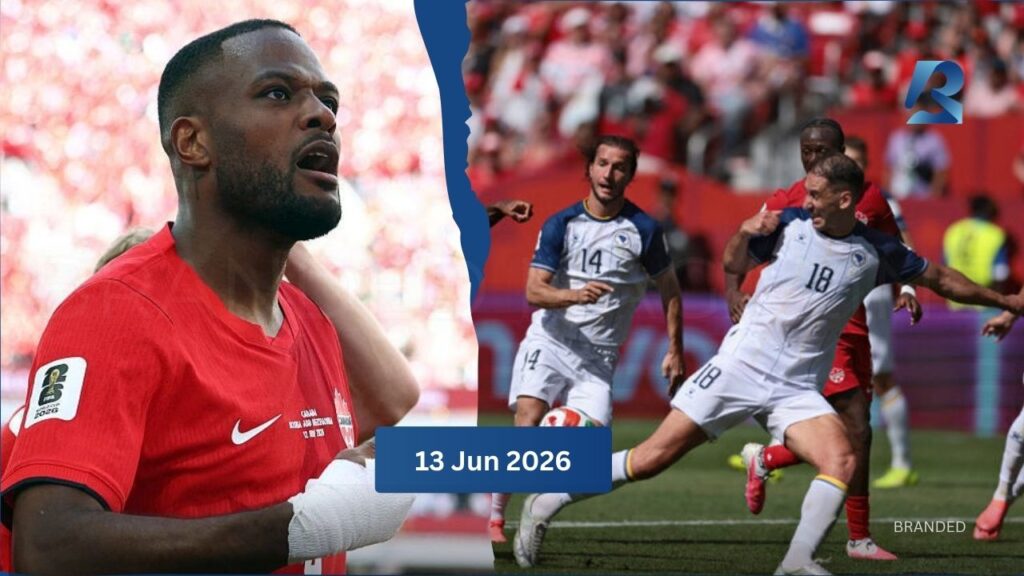
Cyle Larin emerged as Canada’s standout performer thanks to his crucial goal. His movement inside the penalty area and ability to remain composed under pressure helped Canada avoid defeat and secure a valuable point in the tournament opener.
Jonathan David and Stephen Eustaquio also impressed. David consistently generated attacking opportunities, while Eustaquio controlled the midfield through intelligent passing and positioning. Their contributions helped Canada maintain pressure throughout the match.
Canada Key Players Table
| Player | Contribution |
|---|---|
| Cyle Larin | Equalizing Goal |
| Jonathan David | Chances Created |
| Stephen Eustaquio | Midfield Control |
| Alistair Johnston | Defensive Stability |
| Maxime Crépeau | Important Saves |
Top Bosnia-Herzegovina Performers
Jovo Lukić delivered one of the match’s most significant moments by scoring Bosnia-Herzegovina’s opening goal. His composure in front of goal rewarded his team’s tactical discipline and gave them a crucial advantage.
Goalkeeper Nikola Vasilj also played a major role. His shot-stopping ability helped preserve Bosnia’s lead for much of the match and prevented Canada from converting several promising opportunities during periods of sustained pressure.
Bosnia-Herzegovina Key Players Table
| Player | Contribution |
|---|---|
| Jovo Lukić | Opening Goal |
| Nikola Vasilj | Crucial Saves |
| Sead Kolašinac | Defensive Leadership |
| Nikola Katić | Clearances |
| Amar Memić | Attacking Support |
Goal Scorers and Key Moments
The first major moment occurred in the 21st minute when Jovo Lukić scored for Bosnia-Herzegovina. The goal stunned the home crowd and forced Canada to adjust their strategy for the remainder of the match.
Canada’s breakthrough arrived in the 78th minute through Cyle Larin. His goal rewarded Canada’s persistence and reignited excitement inside the stadium. Both moments ultimately defined the final outcome and shaped the narrative of the contest.
Goal Scorers Table
| Team | Player | Minute |
|---|---|---|
| Bosnia-Herzegovina | Jovo Lukić | 21′ |
| Canada | Cyle Larin | 78′ |
Midfield Battle and Possession Stats
Canada dominated possession with 61.1 percent of the ball. Their midfield controlled large portions of the match and frequently dictated tempo through quick passing combinations and intelligent positioning.
Bosnia-Herzegovina recorded 38.9 percent possession but remained effective despite seeing less of the ball. Their midfield players prioritized defensive structure and successfully disrupted several Canadian attacks during critical moments.
Defensive Performance Comparison
Canada’s defense generally performed well and limited Bosnia-Herzegovina to relatively few opportunities. The back line remained organized and prevented the visitors from generating sustained attacking pressure throughout the match.
Bosnia-Herzegovina’s defensive performance proved even more impressive given the amount of pressure faced. Players consistently blocked passing lanes, won important challenges, and protected dangerous areas around the penalty box.
Goalkeeper Statistics and Saves
Maxime Crépeau delivered a reliable performance for Canada. Although he conceded once, he remained composed and handled several dangerous situations effectively. His positioning helped minimize Bosnia’s attacking opportunities.
Nikola Vasilj arguably had the busier evening. Canada’s persistent attacks required multiple important saves, and his performance played a significant role in preserving the draw. His contributions highlighted the importance of goalkeeping in tournament football.
Passing Accuracy and Attacking Numbers
Canada completed more passes and controlled attacking territory for much of the contest. Their ability to maintain possession reflected confidence and technical quality throughout the squad.
The attacking statistics also favored Canada. They recorded 13 shots compared to Bosnia’s eight and earned nine corner kicks. Despite these advantages, converting chances remained a challenge against Bosnia’s disciplined defensive structure.
Team Statistics Table
| Statistic | Canada | Bosnia-Herzegovina |
|---|---|---|
| Possession | 61.1% | 38.9% |
| Shots | 13 | 8 |
| Shots on Target | 4 | 3 |
| Corners | 9 | 4 |
| Yellow Cards | 2 | 3 |
| Red Cards | 0 | 0 |
| Expected Goals | 1.76 | 0.77 |
Tactical Analysis of the Match
Canada’s tactical approach centered on controlling possession and creating numerical advantages in midfield. Their strategy generated territorial dominance and allowed them to dictate much of the game’s rhythm.
Bosnia-Herzegovina adopted a more conservative approach focused on defensive organization and counterattacking opportunities. The strategy worked effectively because it limited Canadian scoring chances while creating opportunities to exploit transitions.
Turning Points That Changed the Game
Jovo Lukić’s opening goal represented the first major turning point. It forced Canada to chase the match and altered the tactical dynamic considerably. Bosnia gained confidence while Canada increased attacking risk.
The second decisive moment came with Cyle Larin’s equalizer. The goal energized the Canadian side and transformed the final stages into an open contest. Both teams pushed for victory, creating an exciting finish. Read More Previous Day Match South Korea vs Czechia Match Player Stats
What the Result Means for Both Teams
For Canada, the draw represented an important point and demonstrated resilience after falling behind. The ability to recover from adversity could prove valuable as the tournament progresses and pressure intensifies.
Bosnia-Herzegovina also gained confidence from the result. Earning a point against the host nation showed their ability to compete effectively at the highest level and strengthened belief within the squad.
Player Ratings and Standout Contributions
Cyle Larin, Jonathan David, and Stephen Eustaquio ranked among Canada’s best performers. Their contributions helped Canada dominate possession and eventually secure a deserved equalizer in front of home supporters.
For Bosnia-Herzegovina, Jovo Lukić and Nikola Vasilj delivered standout displays. One provided the crucial goal while the other produced several important saves. Together, they played decisive roles in securing a valuable result.
Match Statistics Table
Complete Match Statistics
| Category | Canada | Bosnia-Herzegovina |
|---|---|---|
| Goals | 1 | 1 |
| Possession | 61.1% | 38.9% |
| Shots | 13 | 8 |
| Shots on Target | 4 | 3 |
| Corners | 9 | 4 |
| Yellow Cards | 2 | 3 |
| Red Cards | 0 | 0 |
| Expected Goals | 1.76 | 0.77 |
Conclusion
Canada vs Bosnia-Herzegovina delivered an entertaining World Cup encounter filled with tactical battles, individual brilliance, and memorable moments. Bosnia-Herzegovina demonstrated defensive resilience and efficiency, while Canada showcased determination and attacking quality throughout the match.
The 1-1 draw reflected the strengths of both teams. Jovo Lukić and Cyle Larin provided the decisive goals, while several other players delivered standout performances. As the tournament continued, both nations could view this result as a valuable foundation for future success.
Frequently Asked Questions
What was the final score between Canada and Bosnia-Herzegovina?
The match ended in a 1-1 draw.
Who scored for Canada?
Cyle Larin scored Canada’s equalizing goal in the 78th minute.
Who scored for Bosnia-Herzegovina?
Jovo Lukić scored Bosnia-Herzegovina’s goal in the 21st minute.
Which team had more possession?
Canada controlled 61.1% possession compared to Bosnia-Herzegovina’s 38.9%.
How many shots did Canada record?
Canada finished with 13 total shots.
Who was Bosnia-Herzegovina’s standout player?
Jovo Lukić and goalkeeper Nikola Vasilj were among Bosnia’s best performers.
How many corners did Canada earn?
Canada won nine corner kicks during the match.
Why was this match important?
It was a key Group B match in the FIFA World Cup 2026 and earned Canada a valuable point.
Stay More Update BRANDED MAGAZINE