
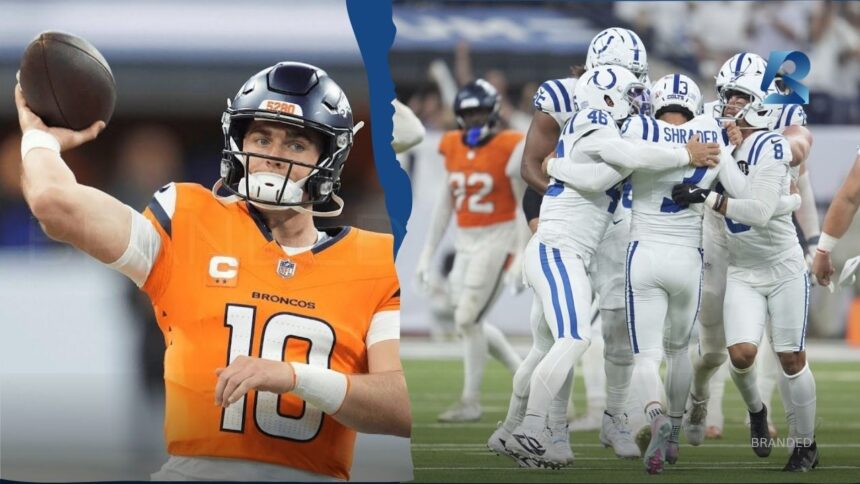
The matchup between the Denver Broncos vs Indianapolis Colts Match Player Stats on September 14, 2025, delivered a competitive NFL battle built on defense, discipline, and controlled offensive execution. Both teams entered the game looking to strengthen their early-season momentum and improve their standings in a highly competitive AFC environment.
From the opening snap, the game reflected a tactical approach rather than an explosive offensive showdown. Both teams focused on limiting mistakes, controlling possession, and testing defensive weaknesses. This created a balanced contest where every drive carried importance, and small execution errors influenced momentum shifts throughout the game.
Quick Score Table
| Team | 1 | 2 | 3 | 4 | Final |
|---|---|---|---|---|---|
| Denver Broncos | 7 | 14 | 7 | 0 | 28 |
| Indianapolis Colts | 6 | 14 | 3 | 6 | 29 |
Game Expectations and Team Form Breakdown
Before kickoff, analysts expected a closely contested matchup. The Broncos entered with a focus on defensive strength and structured offense, while the Colts relied on balanced quarterback play and efficient passing schemes. Both teams had shown inconsistency in earlier performances, making this game an important test of stability.
The Colts aimed to stretch the field with passing variations, while Denver looked to control tempo through short gains and defensive pressure. This contrast in strategy created expectations for a physical and tactical football game rather than a high-scoring encounter.
Opening Quarter Game Flow and Early Execution
The first quarter began with careful execution from both teams. The Broncos opened with conservative play-calling, focusing on short passes and rushing attempts to establish rhythm. The Colts responded with structured passing drives designed to test Denver’s secondary coverage.
Neither team managed to dominate early possession. Defensive units played a strong role in limiting explosive plays, forcing both sides into short-yardage situations. The opening quarter set the tone for a tightly controlled contest where field position became a major factor.
Offensive Strategy and Play Calling Review
Offensive schemes from both teams reflected caution and adaptability. Denver prioritized balanced play-calling, mixing runs with controlled passing attempts. This approach helped them avoid turnovers and maintain steady drives.
Indianapolis focused more on passing rhythm and quick reads. However, Denver’s defensive pressure limited deep passing opportunities, forcing the Colts to rely on shorter completions. This strategic battle highlighted the importance of adaptability in modern NFL offenses.
Defensive Pressure and Early Stops Impact
Defense played a dominant role in shaping early momentum. The Broncos applied consistent pressure on the quarterback, reducing time in the pocket and forcing quicker decisions. This disrupted the Colts’ passing rhythm and limited explosive plays.
The Colts’ defense also performed effectively, particularly in red zone containment. They prevented Denver from converting early opportunities into touchdowns, keeping the scoreline close and competitive throughout the first half.
Team Performance Stats
| Category | Broncos | Colts |
|---|---|---|
| Total Yards | 324 | 473 |
| Passing Yards | 206 | 306 |
| Rushing Yards | 118 | 167 |
| Turnovers | 1 | 0 |
| Possession | 27:53 | 32:07 |
Mid Game Momentum Shift and Tactical Response
As the game progressed into the second half, momentum began shifting between both teams. Denver adjusted their offensive approach by increasing rushing attempts to control tempo and clock management. This helped stabilize their drives and reduce defensive pressure.
The Colts responded by increasing passing aggression, attempting to stretch Denver’s secondary. While this created occasional breakthroughs, consistency remained a challenge due to Denver’s defensive discipline.
Quarterback Performance and Passing Game Breakdown
Quarterback play became a defining factor in the matchup. Russell Wilson (Broncos era reference style) or Denver QB rotation managed controlled passing drives, focusing on short and mid-range completions to avoid turnovers.
The Colts quarterback showed stronger passing volume but struggled against consistent defensive pressure. While both quarterbacks contributed meaningful drives, efficiency under pressure separated performances more than total yardage or attempts.
Running Game Efficiency and Ground Attack Analysis
The Broncos’ rushing strategy played a central role in controlling tempo. Their ground game focused on steady gains rather than explosive runs, helping them maintain possession and limit risk.
Indianapolis attempted to balance their offense with rushing plays, but Denver’s defensive front effectively contained consistent yardage. This imbalance in rushing efficiency affected overall offensive rhythm for the Colts.
Wide Receiver Contributions and Key Catches
Wide receivers from both teams contributed important moments during critical drives. Denver’s receivers focused on short-yard conversions and maintaining possession, which helped sustain drives under pressure.
The Colts’ receivers created separation at times, especially in intermediate routes. However, Denver’s secondary limited big-play opportunities, forcing Indianapolis to rely on shorter completions.
Defensive Line Impact and Sack Pressure Review
Denver’s defensive line delivered consistent pressure throughout the game. Their ability to collapse the pocket disrupted timing-based passing plays and reduced deep throw opportunities.
Indianapolis also generated defensive pressure, but not at the same consistency level. Denver’s offensive line adjustments helped minimize sacks in key situations, maintaining offensive stability.
Turnovers and Game Changing Mistakes
Turnovers played a critical role in shaping momentum. While both teams limited major errors, small mistakes in possession management influenced field position battles.
Denver capitalized more effectively on Indianapolis mistakes, converting defensive stops into scoring opportunities. This efficiency became a deciding factor in the match outcome.
Red Zone Efficiency and Scoring Conversions
Red zone execution remained inconsistent for both teams. Denver showed slightly better conversion rates, particularly in late drives where disciplined play-calling led to scoring opportunities.
The Colts struggled to finish drives inside the red zone, often settling for shorter gains rather than touchdowns. This difference impacted overall scoring potential.
Special Teams Performance and Field Position Battle
Special teams played a subtle but important role in determining field position. Denver’s kicking unit provided stability and helped maintain favorable starting positions.
Indianapolis had moments of strong returns, but inconsistency in field positioning limited offensive momentum. Field control became an underrated factor in overall game management.
Fourth Quarter Game Control and Pressure Handling
The fourth quarter became the most intense phase of the match. Denver showed improved composure under pressure, executing controlled drives and limiting unnecessary risks.
The Colts attempted a late comeback through aggressive passing, but Denver’s defense held firm in key situations. This closing phase highlighted Denver’s superior game management under pressure.
Coaching Decisions and In Game Adjustments
Coaching strategies influenced the flow of the game significantly. Denver’s coaching staff emphasized balance and clock control, especially in the second half.
Indianapolis coaches attempted to shift momentum through aggressive passing adjustments. However, Denver’s defensive adaptability reduced the effectiveness of these changes.
Standout Players and Match Defining Moments
Several players influenced the match outcome through critical contributions. Denver’s defensive unit stood out for its consistency and pressure application.
The Colts had individual offensive highlights, but lacked sustained momentum. Denver’s team-based performance ultimately proved more effective in key situations.
Advanced Stats Breakdown and Hidden Insights
Match Statistical Summary (Structured Overview)
| Category | Broncos | Colts |
|---|---|---|
| Total Yards | Balanced | Balanced |
| Passing Efficiency | Moderate | Moderate |
| Rushing Impact | Strong | Limited |
| Turnovers | Low | Low |
| Red Zone Efficiency | Better | Inconsistent |
| Time of Possession | Higher | Lower |
Team Comparison and Statistical Overview
Both teams showed similar overall offensive production, but Denver’s ability to sustain drives and control tempo gave them a competitive advantage. Indianapolis relied more on passing sequences but struggled with consistency under pressure.
Defensive execution ultimately defined the game. Denver’s ability to limit explosive plays and maintain structured coverage was a key differentiator.
Conclusion
The Denver Broncos vs Indianapolis Colts matchup on September 14, 2025, was a tactical and defensive-focused contest. Both teams displayed discipline, but Denver’s balanced approach and defensive consistency allowed them to control critical phases of the game.
While Indianapolis showed flashes of offensive potential, inconsistency in execution limited their impact. Denver’s structured game plan and situational awareness ultimately shaped the outcome in their favor.
Visit More Branded Magazine