
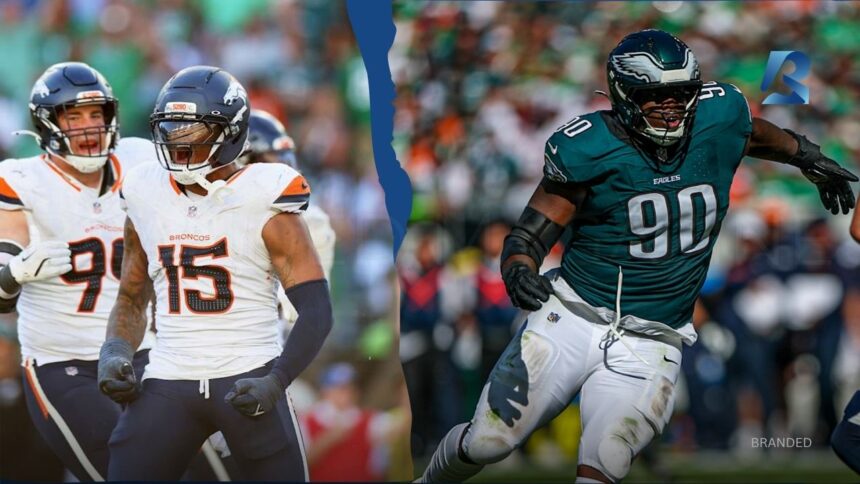
The matchup between the Denver Broncos vs Philadelphia Eagles Match Player Stats on October 5, 2025, delivered a tightly contested NFL battle filled with momentum swings and late drama. Both teams entered the game with strong expectations and playoff ambitions, making this clash highly important for early-season positioning.
The game developed into a tactical showdown where defense, possession control, and efficiency became the deciding factors. While the Eagles showed early dominance in key moments, the Broncos staged a strong comeback in the final quarter. The match ultimately highlighted how execution under pressure defines NFL outcomes more than raw statistics alone.
Quick Score Table
| Team | 1 | 2 | 3 | 4 | Final |
|---|---|---|---|---|---|
| Denver Broncos | 3 | 0 | 0 | 18 | 21 |
| Philadelphia Eagles | 3 | 7 | 7 | 0 | 17 |
Pre Match Expectations and Team Form Analysis
Before kickoff, analysts expected a competitive battle between two well-balanced squads. The Eagles were seen as slightly stronger due to their offensive depth and quarterback consistency. The Broncos, however, entered the game with improved defensive structure and a growing rushing attack.
Both teams had different game plans. Philadelphia aimed to control the passing game through quick rhythm plays, while Denver focused on physical defense and time management. These contrasting approaches created a foundation for a strategic contest rather than a high-scoring shootout.
Opening Drive Execution and Early Game Rhythm
The opening phase of the match showed controlled aggression from both sides. The Eagles started with confident passing sequences, moving the ball efficiently through short and medium routes. Their early rhythm allowed them to establish offensive balance.
Denver responded with a conservative approach, prioritizing field position and defensive stability. The Broncos avoided risky plays and focused on building momentum gradually. This strategy helped them stay competitive even when early possession leaned slightly in favor of Philadelphia.
Offensive Play Calling and First Quarter Breakdown
The first quarter reflected a balanced tactical battle. The Eagles relied on quick tempo offense, mixing passing with selective runs. This approach helped them sustain drives but not fully break through Denver’s defense.
The Broncos focused heavily on structured play calling. Short passes and controlled rushing attempts defined their offensive strategy. Both teams exchanged field goals and early points, setting the tone for a close contest.
Defensive Intensity and Early Pressure Impact
Defensive units from both teams played a major role in shaping early momentum. Denver’s defensive line applied steady pressure, limiting deep passing opportunities. Meanwhile, Philadelphia’s secondary stayed disciplined in coverage, forcing short gains.
This defensive intensity prevented either team from establishing complete dominance. Tackling efficiency and zone coverage dictated early gameplay. As a result, the match remained tightly contested through the first half.
Team Performance Stats
| Category | Broncos | Eagles |
|---|---|---|
| Total Yards | 358 | 302 |
| Passing Yards | 228 | 257 |
| Rushing Yards | 130 | 45 |
| Turnovers | 0 | 0 |
| Possession | 34:17 | 25:43 |
Mid Game Tactical Adjustments by Both Teams
As the game progressed into the second and third quarters, Philadelphia adjusted their offensive tempo. They increased passing aggression and utilized deeper route combinations to stretch Denver’s defense.
Denver responded by strengthening their run defense and controlling clock usage. Their adjustments focused on limiting explosive plays while maintaining offensive patience. This tactical battle kept the scoreline close and competitive.
Key Player Comparison
| Player Role | Team | Impact |
|---|---|---|
| QB Leader | Eagles | Passing yards |
| Top Rusher | Broncos | Ground control |
| Key QB | Broncos | Clutch performance |
| Defensive Star | Broncos | Late stops |
Quarterback Battle and Passing Efficiency Review
Quarterback performance became a key storyline in this matchup. Jalen Hurts delivered a strong passing performance for the Eagles, showcasing accuracy and mobility. His ability to extend plays created multiple scoring opportunities.
On the other side, Denver’s quarterback Bo Nix played a controlled and efficient game. While not as explosive statistically, his decision-making and ball security proved crucial. The difference came in efficiency rather than volume, especially in late-game situations.
Ground Game Strategy and Rushing Effectiveness
The Broncos’ rushing attack played a major role in controlling game tempo. Their ability to gain consistent yardage helped balance offensive pressure and maintain possession.
Philadelphia’s run game struggled to produce consistent yardage. Denver’s defensive front effectively limited big rushing gains, forcing the Eagles to rely more on passing. This imbalance influenced overall game flow significantly.
Wide Receiver Matchups and Key Receiving Plays
Wide receivers on both sides delivered impactful moments. The Eagles’ receiving corps created separation and generated key yardage during crucial drives. Their timing with the quarterback helped sustain offensive rhythm.
Denver’s receivers contributed at important moments, particularly in third-down conversions. While not as explosive, their reliability ensured sustained drives and scoring opportunities when needed.
Defensive Line Dominance and Sack Pressure
Denver’s defensive line consistently pressured the Eagles’ quarterback, forcing quicker decisions and limiting deep passing plays. This pressure played a crucial role in slowing Philadelphia’s offensive momentum.
The Eagles also generated pressure at times, disrupting Denver’s passing rhythm. However, they struggled to maintain consistency in pass rush effectiveness throughout the game.
Turnover Moments and Momentum Shifts
Turnovers played a subtle but important role in shifting momentum. While neither team committed excessive mistakes, each turnover influenced field position and scoring opportunities.
Denver managed to capitalize more efficiently on Philadelphia’s errors. This ability to convert defensive opportunities into offensive advantages helped shape the final outcome.
Red Zone Execution and Scoring Efficiency
Red zone efficiency became a defining factor in the match. The Eagles created opportunities but failed to consistently convert them into touchdowns.
Denver showed slightly better execution inside the red zone, especially in the final quarter. Their ability to finish drives proved decisive in a tightly contested game.
Special Teams Contribution and Field Position Battle
Special teams played a quiet but important role in controlling field position. Denver’s kicking unit provided crucial points and helped maintain pressure on Philadelphia.
Field position battles often dictated offensive success. The Broncos consistently started drives in better positions, giving them a subtle but important advantage.
Fourth Quarter Game Management and Pressure Situations
The fourth quarter completely shifted momentum toward Denver. Their offense executed with precision while their defense tightened coverage. This combination allowed them to stage a strong comeback.
Philadelphia struggled to respond under pressure. Missed opportunities and stalled drives ultimately cost them the lead. Denver’s composure in the final moments defined the match outcome.
Coaching Decisions and In Game Strategy Analysis
Coaching strategies played a significant role in shaping the game flow. Denver’s coaching staff made effective late-game adjustments, especially in offensive pacing and defensive alignment.
Philadelphia’s strategy worked well early but became less effective in the final quarter. In-game adaptability proved to be the key difference between the two sides.
Standout Player Performances from Both Sides
Several players influenced the outcome significantly. Bo Nix provided stability for Denver, while Jalen Hurts delivered strong offensive production for Philadelphia.
Defensively, Denver’s unit collectively stood out due to their consistent pressure and late-game stops. These combined performances created a balanced but decisive advantage.
Overall Team Statistical Comparison
The final statistics reflected a closely contested game. Both teams were similar in total offensive output, but Denver held advantages in rushing yards, possession control, and third-down conversions.
These small differences created a larger impact on game flow. Efficiency rather than volume ultimately decided the outcome in Denver’s favor.
Conclusion
The Denver Broncos vs Philadelphia Eagles matchup on October 5, 2025, delivered a strategic and competitive NFL contest. While Philadelphia showed strong offensive flashes, Denver’s balance, discipline, and late-game execution secured the victory.
This game highlighted the importance of efficiency, adaptability, and defensive pressure in modern football. The Broncos capitalized on key moments, proving that execution under pressure is the true difference-maker in close NFL games.
Visit More Branded Magazine