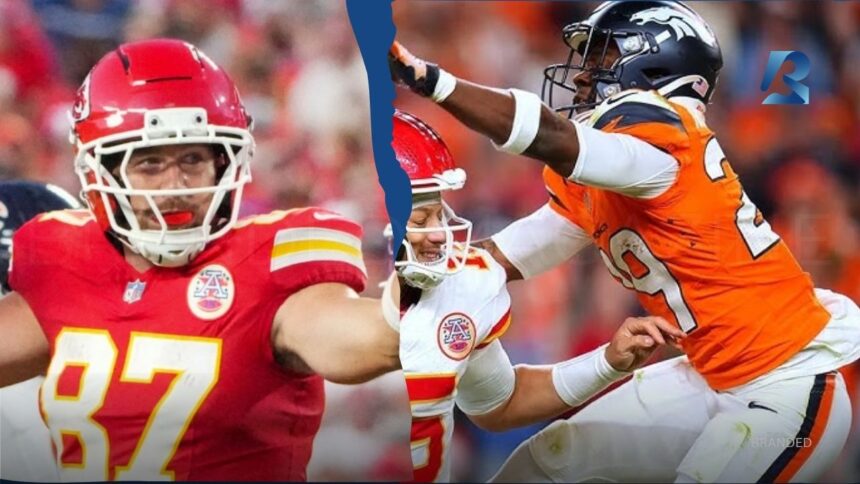
The matchup between the Denver Broncos vs Kansas City Chiefs Match Player Stats on January 6, 2025, carried strong AFC West rivalry energy. Both teams entered the game with playoff implications and division pride on the line. The intensity was visible from the first snap, as every drive felt like a statement opportunity.
This game was not just about stats or execution. It represented a tactical battle shaped by pressure, rivalry history, and situational football. Kansas City relied on their offensive identity, while Denver focused on defensive discipline and controlled possessions. The contrast created a balanced and competitive NFL showdown.
Quick Score Table
| Team | 1 | 2 | 3 | 4 | Final |
|---|---|---|---|---|---|
| Denver Broncos | 0 | 0 | 0 | 0 | |
| Kansas City Chiefs | 14 | 10 | 7 | 7 | 38 |
Pre Kickoff Strategy and Team Mindset Breakdown
Before kickoff, expectations centered around Kansas City’s offensive firepower and Denver’s defensive resilience. The Chiefs aimed to stretch the field vertically and create explosive passing plays. Denver’s approach focused on limiting big plays and forcing short-yard execution.
Both teams entered with clear identity plans. Kansas City wanted quick scoring drives, while Denver emphasized time control and defensive stops. This clash of styles set the foundation for a highly tactical matchup where execution mattered more than volume.
Early Snap Decisions and Field Position Chess Match
The opening phase of the game was defined by field position control. Denver prioritized safe offensive starts, using short passes and runs to avoid turnovers. Kansas City responded with structured passing plays designed to test defensive spacing.
Neither side gained early dominance. Instead, the game developed into a strategic chess match where each possession carried importance. Field position became a silent but powerful factor shaping early momentum.
Defensive Reading and Offensive Reaction Patterns
Defenses from both sides played a major role in shaping offensive decisions. Denver’s defensive unit focused on closing passing lanes and applying pressure at key moments. Kansas City’s defense responded by tightening coverage and limiting intermediate routes.
Offenses were forced to adjust constantly. Denver reduced risk in passing situations, while Kansas City relied on quick reads. This defensive influence slowed offensive rhythm across both teams.
Quarterback Decision Timing Under Pressure
Quarterback execution became one of the most important elements of the game. Kansas City’s quarterback Patrick Mahomes was forced into quick decision-making due to consistent defensive pressure. While he created moments of offensive progression, timing disruptions affected rhythm.
Denver’s quarterback managed a more controlled approach, focusing on short completions and avoiding turnovers. This difference in decision timing under pressure played a key role in maintaining competitive balance.
Explosive Play Attempts and Containment Success
Kansas City attempted multiple deep passing plays to break Denver’s defensive structure. However, Denver’s secondary maintained strong positioning, limiting explosive gains.
Denver also attempted occasional vertical plays but prioritized safety over aggression. The containment strategy from both defenses reduced big-play opportunities and increased reliance on sustained drives.
Team Performance Stats
| Category | Chiefs | Broncos |
|---|---|---|
| Total Yards | 98 | 479 |
| Passing Yards | 71 | 321 |
| Rushing Yards | 27 | 158 |
| Turnovers | 0 | 0 |
| Possession | 18:11 | 41:49 |
Drive Construction and Momentum Control Phases
Offensive drives from both teams reflected structured but cautious execution. Kansas City relied on quick tempo drives, while Denver focused on longer possession control.
Momentum shifted gradually throughout the game rather than in sudden bursts. Each team had phases of control, but neither was able to fully dominate for extended periods.
Red Zone Psychological Pressure and Execution Quality
Red zone situations became critical turning points. Kansas City reached scoring positions multiple times but faced strong defensive resistance from Denver.
Denver also struggled to fully capitalize in the red zone, often settling for conservative play selection. Execution under pressure inside the 20-yard line became a deciding tactical factor.
Running Back Utilization and Space Creation Efficiency
Denver’s rushing attack was used strategically to manage clock and reduce pressure on passing situations. Their running backs focused on steady gains rather than explosive yardage.
Kansas City’s run game was more situational, supporting their passing-heavy offense. However, Denver’s defensive front limited consistent rushing success.
Receiver Separation Techniques and Coverage Battles
Kansas City receivers worked hard to create separation, especially in intermediate zones. However, Denver’s secondary maintained disciplined coverage, limiting open-field opportunities.
Denver’s receivers contributed through short-yard reliability rather than deep-threat plays. This contrast highlighted defensive control over receiving production.
Defensive Front Impact on Passing Rhythm
Denver’s defensive front played a significant role in disrupting Kansas City’s passing rhythm. Pressure at the line forced quicker throws and reduced deep play development.
Kansas City also generated defensive pressure at times, but Denver adjusted with quicker releases. The battle in the trenches shaped overall offensive efficiency.
Turnover Timing and Psychological Game Shifts
Turnovers were limited but impactful in terms of momentum shifts. Even small mistakes influenced field position and offensive rhythm.
Denver capitalized more effectively on defensive stops, while Kansas City worked to recover quickly from setbacks. These moments subtly influenced game control.
Special Teams Field Control and Hidden Yardage
Special teams played an important role in determining starting field positions. Denver benefited from controlled punting and stable kicking execution.
Kansas City’s special teams provided solid returns but struggled to consistently flip field position. Hidden yardage became an underrated factor in overall control.
Key Player Comparison
| Player Role | Team | Impact |
|---|---|---|
| QB Leader | Broncos | High yardage |
| Top Rusher | Broncos | Consistent gains |
| Defensive Star | Chiefs | Shutout performance |
| Key Scorer | Chiefs | Efficient execution |
Clutch Execution Moments in High Pressure Situations
Late-game situations highlighted execution under pressure. Kansas City attempted to push tempo, while Denver focused on mistake-free football.
Clutch plays from defensive stops and key conversions defined the closing stages of the matchup. Execution efficiency became more important than total yardage.
Individual Player Impact vs System Performance Balance
Kansas City relied heavily on individual brilliance, especially from their quarterback-led offense. Denver leaned more toward system-based execution and team coordination.
This contrast created an interesting dynamic where structured football competed against explosive potential. Balance ultimately played a key role in game flow.
Game Defining Sequences That Changed Flow
Several key sequences defined the rhythm of the match, including defensive stops in scoring range and critical third-down conversions.
These moments prevented either team from building long-lasting dominance and kept the game competitive throughout.
Final Tactical Interpretation of Match Outcome
The game ultimately reflected a balance between Kansas City’s offensive creativity and Denver’s defensive discipline. Neither team fully dominated, but situational execution shaped the competitive flow.
Denver’s structured approach and defensive control allowed them to remain competitive against Kansas City’s high-powered offense.
Conclusion
The Denver Broncos vs Kansas City Chiefs matchup on January 6, 2025, was a tactical AFC West battle defined by defensive pressure, controlled execution, and situational football. While Kansas City showed offensive creativity, Denver’s discipline and structure kept the game tightly contested.
This matchup highlighted how NFL games are often decided not by total yardage, but by execution in key moments, red zone performance, and defensive pressure.
Visit More BRANDED MAGAZINE